Turn a 10-minute Zoom call into a step-by-step SOP in one click
Converting a quick demonstration into a usable SOP often takes longer than the demo itself. Discover how to automate documentation from team calls, transforming informal knowledge into structured, actionable guides with minimal effort.
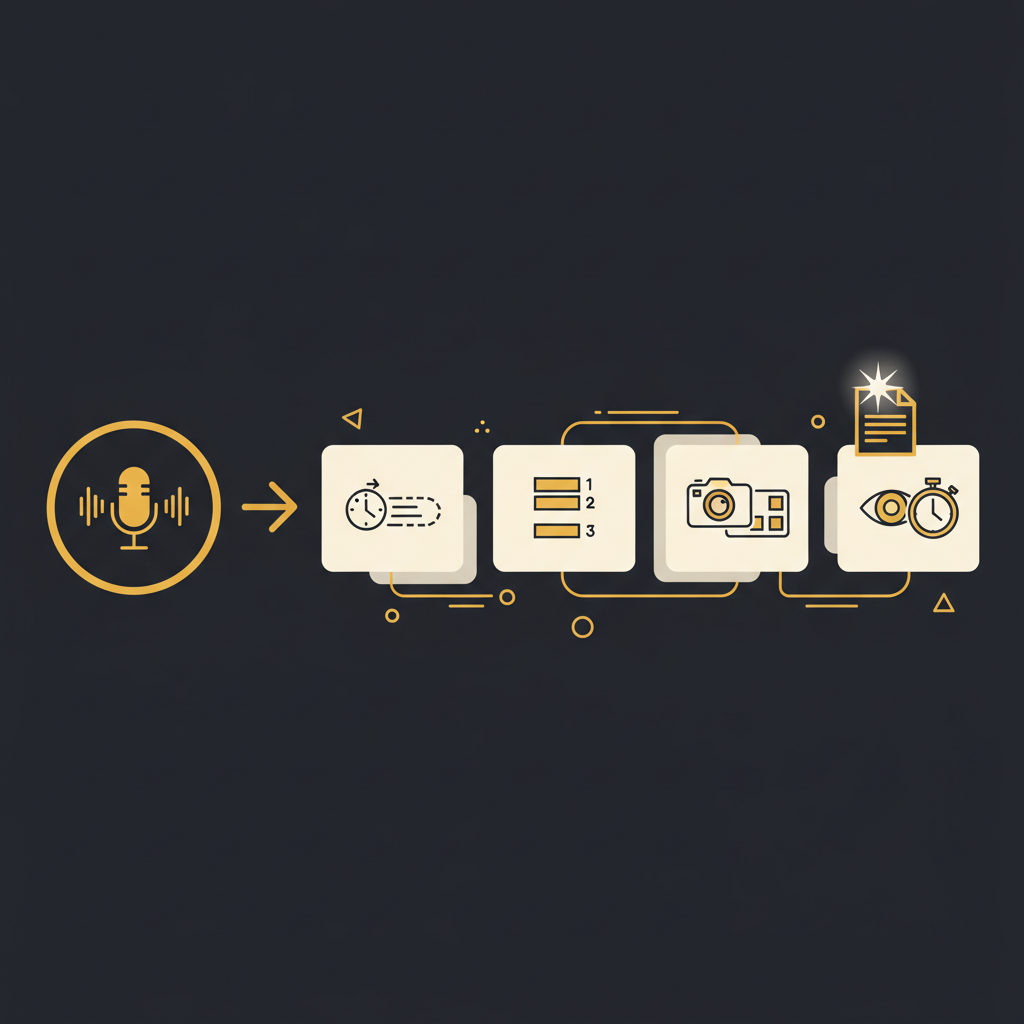
The ad-hoc Zoom call, a familiar staple in today's distributed work environment, frequently serves as the primary mechanism for knowledge transfer. A quick screen share to demonstrate a new process, troubleshoot an issue, or onboard a peer seems efficient in the moment. However, the true cost often emerges immediately afterward: how to capture that ephemeral knowledge into a durable, accessible, and accurate standard operating procedure (SOP). The conventional approach, relying on memory, manual transcription, and screenshotting, is not merely time-consuming; it is a significant drain on organizational resources, often resulting in outdated, inconsistent, or even incorrect documentation. This reliance on post-hoc reconstruction perpetuates inefficiencies, leads to repeated inquiries, and ultimately hinders operational scalability. There is a more direct and intelligent path to converting live demonstration into structured, actionable knowledge.
The Hidden Cost of Manual Documentation from Calls
Consider a common scenario: a senior operations manager spends ten minutes walking a new team member through a critical CRM update, perhaps demonstrating how to process a specific customer request or reconcile an edge case. The demonstration itself is clear, concise, and seems effective. The subsequent task of documenting this process, however, typically involves the new hire (or the manager, if time permits) re-watching the recording, pausing frequently to decipher steps, typing out instructions, and painstakingly capturing and annotating screenshots. This isn't a ten-minute follow-up task. More realistically, a focused individual will spend anywhere from 30 to 60 minutes, or even longer for complex workflows, to produce a truly step-by-step guide with accompanying, visually accurate visuals. This substantial time expenditure is compounded across every new process, every updated workflow, and every new hire. The predictable outcome is a perpetual backlog of undocumented knowledge, leading to repeated questions, inconsistent execution across teams, and a dangerous over-reliance on tribal knowledge that undermines operational efficiency. This manual, reactive process is not just slow; it inherently introduces errors, omits crucial details due to human recall limitations, and almost guarantees that the documentation is out of date before it is even published, creating a continuous cycle of rework and frustration.
Direct Capture: Recording Work as the Definitive Source of Truth
The fundamental flaw in traditional documentation approaches, especially those derived from video recordings, is the reliance on a secondary act of transcription and interpretation. A more robust and accurate methodology directly captures the work as it is performed. Imagine a lightweight Chrome extension that silently observes a user's interaction with web-based tools during a live demonstration. Every click, every input, every navigation step is recorded, not as a passive video stream, but as discrete, structured actions inextricably linked to their precise visual context. This distinction is critical: it's not simply recording pixels; it's capturing the intent and action. The system intelligently differentiates between a deliberate, meaningful interaction and a moment of hesitation or an accidental click. It automatically generates a chronological sequence of events, complete with context-rich screenshots of the user interface at each critical juncture. This method entirely eliminates the need for manual screenshotting, ensures pixel-perfect visual accuracy, and provides an undeniable, verifiable source of truth for every documented process. This direct capture mechanism fundamentally shifts the burden from time-consuming manual recreation to intelligent, automated observation, ensuring that the resulting documentation precisely mirrors the live execution without human error or omission.
Intelligent Automation: From Raw Capture to Polished SOP in Minutes
Capturing raw actions is only the initial step towards truly effective documentation. The significant value emerges in the intelligent, automated processing of that granular data. A typical team call, even one specifically focused on a demonstration, is invariably riddled with conversational filler, momentary pauses, and irrelevant digressions that add no value to a procedural guide. An effective automation layer must discern meaningful steps from this noise. This involves automatically stripping out unnecessary dialogue, identifying the core, actionable steps, and synthesizing them into a coherent, numbered sequence. Advanced algorithms analyze the recorded actions and accompanying narration (if present) to distill the essence of the process. Each identified step is then automatically associated with the exact, relevant screenshot of the user interface at that precise moment, providing immediate, unambiguous visual context. Furthermore, critical operational considerations like data privacy cannot be an afterthought. Automated PII (Personally Identifiable Information) redaction, for example, is essential for sensitive workflows. The system is designed to identify and automatically blur or remove sensitive data (like names, email addresses, or account numbers) from screenshots and text before the documentation is ever finalized, ensuring compliance with privacy regulations and significantly reducing manual review overhead for security concerns. This intelligent transformation from raw recording to a polished, actionable SOP is where the most profound time savings are realized, reducing what would be hours of painstaking manual effort to mere minutes of automated processing and a swift review.
The Compounding Operational Advantages of Automated Documentation
- Accelerated Onboarding and Training: New hires gain immediate access to accurate, visual, step-by-step guides for all critical processes, drastically reducing ramp-up time from weeks to days. This minimizes the need for repeated, one-on-one training sessions, freeing up expert time.
- Reduced Support Burden: Clear, self-service documentation empowers users to resolve common issues independently. When a process is clearly outlined with visual aids, the volume of routine "how-to" questions directed to support and operations teams significantly decreases, allowing them to focus on more complex challenges.
- Enhanced Process Consistency and Quality: By standardizing workflows through automatically generated and visually precise SOPs, organizations ensure that every team member follows the exact same correct procedure. This minimizes human errors, improves the quality of output, and ensures regulatory compliance where applicable.
- Proactive Documentation Maintenance: The underlying user interface of most web applications changes frequently. A robust system proactively detects when the interface depicted in an existing SOP no longer matches the live application. It automatically flags these documents for a quick, targeted review and update, eliminating the widespread problem of outdated, untrustworthy documentation that plagues many organizations.
- Efficient Knowledge Transfer and Retention: Experts can share complex workflows in real-time demonstrations, confident that their valuable knowledge is instantly captured and transformed into an easily digestible guide. This removes the secondary burden of manual documentation, ensuring critical expertise is retained and accessible even if key personnel move on.
This level of operational efficiency frees up valuable time for senior leaders and their teams to focus on strategic initiatives, innovation, and problem-solving, rather than being mired in reactive documentation or repetitive training.
The traditional reliance on manual documentation from team calls represents a significant bottleneck that actively hinders operational agility, knowledge scalability, and overall productivity. By strategically shifting to a paradigm where work is directly captured and intelligently processed, organizations can transform informal, ephemeral demonstrations into robust, searchable, and consistently updated standard operating procedures. This intelligent approach not only saves significant time in the creation process, often enabling a two-minute review cycle for what previously took an hour or more, but also systematically builds a resilient knowledge base that proactively adapts as your tools, applications, and internal processes inevitably evolve. It is about making expertise persistent and accessible, ensuring that every valuable interaction contributes to a growing, accurate repository of organizational knowledge, without imposing a prohibitive documentation tax on every team member.
Stop writing docs nobody reads.
Record them instead.
Install the extension, walk through the tool you're tired of explaining. Tome Robot does the rest.